Blog

Events Committee: Roles, Structure, and Where It Actually Breaks

Debbie Ashford

July 15, 2026

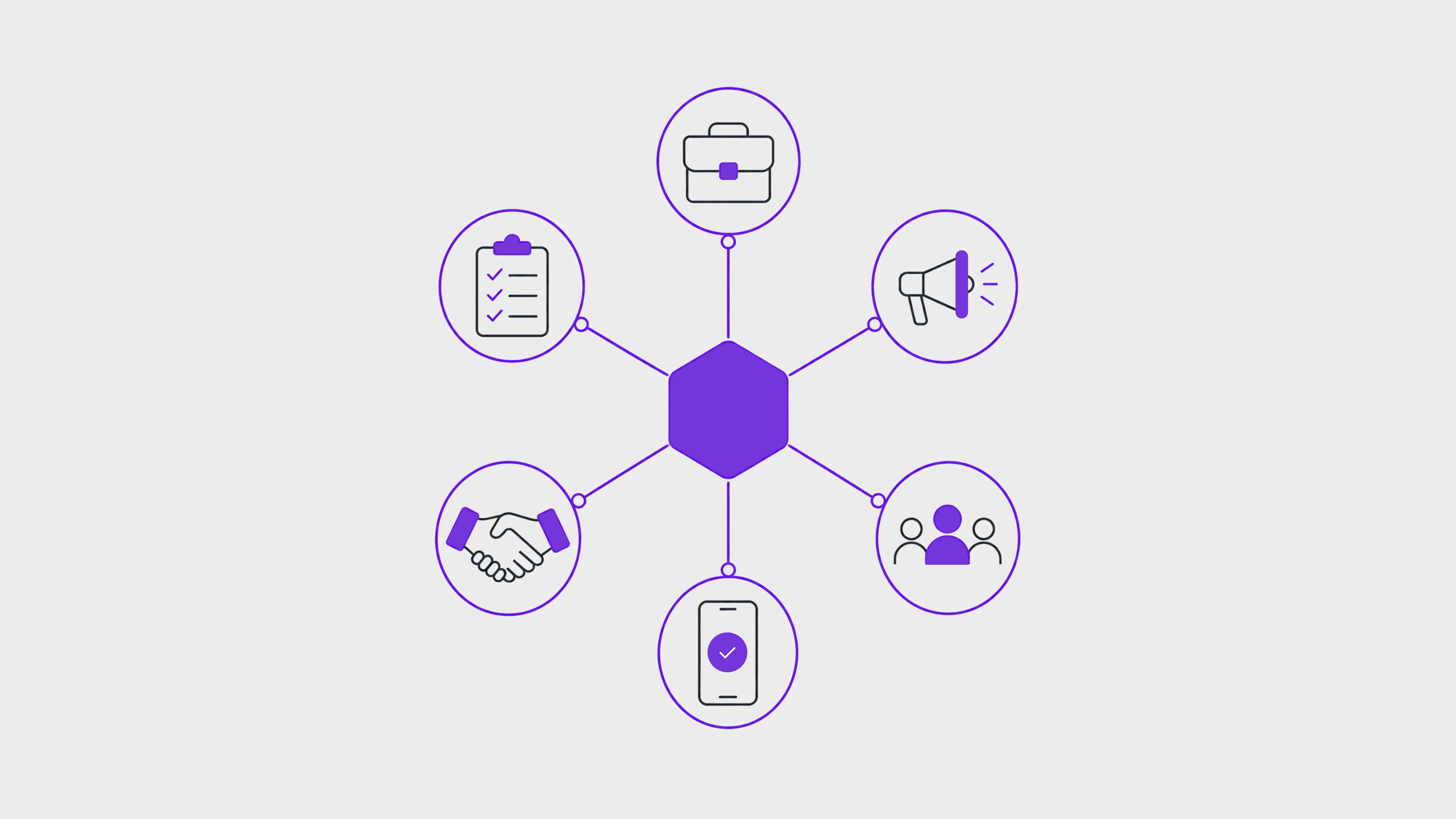
Diagram showing the core roles of an events committee connected to a central coordination hub

An events committee is a group of people, usually five to twelve, who share responsibility for planning an event that would overwhelm one person alone. Roles typically split by function: logistics, budget, marketing, sponsorship, and volunteer management. The structure works well for organizing decisions. It works badly for organizing execution, unless someone owns the systems those decisions feed into.


That second part is the piece other guides skip.

What Is an Events Committee, Exactly?

An events committee is a team assembled to plan and run a specific event or a recurring series of events. Each member owns a lane: someone handles the budget, someone manages vendors and logistics, someone runs marketing and promotion, someone manages sponsors, someone recruits and schedules volunteers. A chair or lead ties the lanes together through regular communication and makes the calls when two sub-committees disagree. Good committee management depends less on any one person's talent and more on whether that communication actually happens on a schedule, not just when something goes wrong.


Committees show up most often in three settings. In corporate events, an HR or marketing team gets asked to run an annual conference or company town hall as an addition to their actual job. In nonprofit events, fundraising galas and community programs run almost entirely on a volunteer committee. In associations and academic bodies, a rotating committee runs the same annual conference year after year, often with different people each cycle.


The structure looks the same across all three settings. Only the staffing changes. Corporate committees lean on paid staff and contracted vendors. Nonprofit committees mix a small paid staff with unpaid volunteers. Academic committees mix faculty, students, and outside coordinators.

What Roles Make Up a Typical Events Committee?

Committees typically settle into the same six to eight functions, whether it is a 200-person nonprofit gala or a 2,000-person corporate conference. Marketing usually owns the social media calendar and registration push. Logistics usually owns catering and food service alongside venue and transport.


Role

Owns

Common Failure Point

Chair or Event Lead

Final decisions, overall timeline, cross-committee coordination

Becomes a bottleneck if every small decision routes through them

Budget or Finance Committee

Overall budget, vendor contracts, expense tracking, revenue from ticket sales

Budget lives in a spreadsheet nobody else can see in real time

Logistics Committee

Venue, catering, food service, transport, room setup

Changes made on-site never make it back to the master plan

Marketing and Promotions Committee

Registration numbers, social media, event page, email campaigns

Doesn't know actual RSVP count until days before the event

Sponsorship Committee

Sponsor recruitment, contract deliverables, sponsor visibility on-site

Benefits promised verbally to a sponsor, never tracked against what actually gets delivered

Volunteer or Staffing Committee

Recruiting, training, day-of scheduling

Volunteers show up without knowing which check-in station or session they're assigned to

Technology and AV Committee

Event app, check-in systems, livestream, Wi-Fi capacity

Set up in isolation from registration data, so the guest list on the check-in tablet doesn't match who actually registered

Program or Content Committee

Agenda, keynote and session speakers, education tracks

Finalizes the agenda without checking it against the room capacity logistics already booked


The technology and AV committee is worth a separate callout. It used to be optional, something you added if budget allowed. For any event running a mobile agenda, check-in, livestream, or hybrid event component, it is not optional anymore. It is also the role committees tend to staff last, and staff worst. It usually gets handed to whoever on the team happens to be "good with computers," rather than someone who owns it as a real function.

Why Do Events Committees Struggle, Even With Clear Roles?

Because clear roles on an org chart do not automatically produce a shared source of truth. Here is what actually happens at a lot of events, three weeks out.


The marketing committee has a registration count pulled from one export. The budget committee has a headcount estimate they built two months ago, before registrations even opened. The volunteer lead is scheduling shifts based on a guess pulled from last year's event. The logistics committee already placed the catering order off the old number. Nobody notices the gap until the caterer calls asking for a final headcount, and three different committee members give three different answers on the same call.


This is not a communication problem you fix by adding another weekly meeting. It is a data problem. Five people are each holding a partial, outdated copy of the same information, and none of their copies update automatically when someone else's changes.


The same failure shows up again at the door. A committee spends months getting the guest list, the sponsor list, and the VIP list exactly right. Then it hands the actual check-in desk to whoever's free that morning, armed with a printed spreadsheet. Manual check-in against a printed list runs 45 to 90 seconds per person once you count the "let me check the spelling" and "you're not on here" back-and-forth. That processes only 40 to 80 people an hour. Switch that same door to a mobile app with QR code scanning, or add a self-service kiosk for overflow, and throughput jumps to 240 to 400 people an hour (Nunify data across 200+ events). For a 300-person event, 60 to 70% of attendees arrive in the first thirty minutes. That gap is the difference between doors open on schedule and a line stretching into the parking lot.


None of this means committees are the wrong structure for running an event. It means the committee's real job is making decisions. Somebody specific needs to own turning those decisions into one shared system everyone can see. Otherwise you get five spreadsheets that agree with each other for about a day, then quietly drift apart.

Who Actually Makes the Decisions, and How?

Committees are bad at decision-making by design, and that is not a criticism. A group of eight people each representing a different function will naturally disagree about trade-offs. The catering budget the finance chair wants to protect is the line item the logistics chair wants to expand for a better venue. That tension is useful. It surfaces trade-offs a single person planning alone would miss entirely.


The failure mode is not the disagreement. It is what happens after the meeting ends without a clear decision-making workflow. Good committees name a single decision-maker for each function, usually the sub-committee chair, and reserve full-committee votes for genuine cross-cutting calls: total budget, venue choice, whether to add a virtual event component. Everything else gets decided by whoever owns that lane, then communicated once, not re-litigated in every subsequent meeting.


This is also where event management software earns its place, separate from check-in and the attendee app. Picture a shared workflow tool where budget line items, vendor contracts, and task ownership all live in one place, visible to every sub-committee chair. It removes the need for a weekly status meeting whose entire purpose is restating what changed since last week. The business case for this kind of tooling is not efficiency for its own sake. It is that a volunteer committee meeting once a month cannot afford to spend half of that meeting time catching up on status that a shared system would have shown automatically.

What Goes Wrong at the Sponsorship and Fundraising Level?

Sponsorship and fundraising committees run into a version of the same problem, just with money and reputation attached instead of headcount.


A sponsor signs on for a certain visibility package: logo on the step-and-repeat, a mention from stage, a booth in a specific location, a set number of complimentary badges for their team. That agreement usually lives in an email thread or a signed PDF the sponsorship chair keeps in their inbox. Nobody else on the committee sees it. Three weeks later, the logistics committee finalizes floor plans without knowing the sponsor was promised a specific booth location. The program committee schedules the keynote without knowing a different sponsor paid for a stage mention during that exact session.


For nonprofit fundraising events specifically, this problem compounds. A fundraising committee is often managing donor relationships, auction item procurement, and ticket revenue simultaneously, frequently relying on volunteering rather than paid staff to run most of it. Volunteering brings real advantages: people who care about the cause, lower cost, and often deep community ties the nonprofit organization couldn't otherwise afford to hire for. It also means the person at the check-in desk on event night may have joined the committee three weeks ago and never seen the sponsor agreements. When that volunteer cannot tell a VIP table sponsor from a general ticket holder, or an auction donor owed a specific seat assignment, that distinction lives in someone's head instead of in the system running the door. That is exactly the kind of detail that gets lost when a committee hands off months of careful planning to a printed list and a well-meaning volunteer on event day.

When Do You Actually Need a Full Committee?

Not every event needs six sub-committees and a chair. A single ops person with a good checklist handles a 40-person team offsite just fine. A full committee structure earns its overhead once an event crosses a few real thresholds. Here's when it's worth building one out:


  • Attendee count above roughly 150 to 200. Below that, one or two people can hold the whole plan in their heads without a formal structure.
  • Multiple stakeholder groups with real decisions to make. Sponsors who need deliverables tracked, a leadership team that wants sign-off on the agenda, a comms team running its own channel. If it is just you and a venue, skip the committee.
  • A recurring event. An annual conference benefits from a standing committee that carries institutional knowledge forward year to year. A one-off event does not need a permanent structure built to outlast it.
  • Multi-day or multi-track format. Sessions, speakers, and badges spread across three days need more coordination than a single afternoon does.


Under those thresholds, a full committee adds meetings without adding value. The honest move is a small core team and one shared document, not a committee with a charter and eight sub-groups for a 60-person lunch.

How Do You Keep Committee Decisions From Falling Apart at Execution?

The fix is not more committee meetings. It is making sure the committee's decisions land in one shared system instead of five disconnected ones.


Budget decisions need to update the same number the logistics committee is looking at. Registration numbers the marketing committee is tracking need to be the exact number the caterer gets quoted for food and headcount. The guest list the volunteer committee built needs to be the same list running at the door on event day. It cannot be a printed export from two weeks earlier that's already gone stale.


That's what a check-in and badging system is actually for. It is not a separate technology purchase bolted onto the committee's plan after the fact. It is the shared place where registration, the guest list, and day-of execution stay one list, updated in real time. No more three different files that three different committee members are each trying to keep in sync by hand.


The same logic applies on the attendee side. Once the committee agrees on the agenda, speaker lineup, and sponsor visibility, an event app is where all of that actually reaches attendees. It doesn't sit in a shared drive only the committee can see. An agenda change the logistics committee makes at 9pm the night before shows up on attendees' phones by 9:01pm, not buried in an email nobody opens before breakfast.


For events with a virtual event or hybrid event component, this matters even more. A committee running a hybrid event is coordinating two audiences at once: the room, and everyone watching remotely. Session changes, Q&A, and networking need to reach both audiences from the same system, not a separate improvised workaround for the remote half of the room.

What About Regulatory Compliance and Data Governance?

This is the part committees think about least and regret skipping most. Event registration collects names, emails, sometimes payment details, and for corporate or association events, often job titles and company affiliations that attendees consider sensitive. If any part of that data touches attendees in the EU, UK, or other regions with data protection law, GDPR compliance is not optional. "We used a spreadsheet" is not a defensible answer if a data request comes in after the event.


A committee running check-in and registration through a proper system inherits that system's compliance posture instead of building one from scratch out of shared spreadsheets and personal email accounts. It is a boring, unglamorous reason to care about the technology committee's choices early. It is also the reason legal and compliance teams get involved in event planning at all once a company reaches a certain size. A data breach tied to an internal company event becoming industry news is a rare but real risk. It is far cheaper to prevent at the software-selection stage than to explain afterward.

How Do You Evaluate Whether the Committee Actually Worked?

Committees typically disband the week after the event and never formally look back at what worked. That is a missed opportunity, especially for recurring events.


A short post-event evaluation, thirty minutes with the chairs of each sub-committee, should cover three things. Where did the numbers everyone was tracking, budget, registration, headcount, actually diverge from each other during planning? What feedback came in from attendees or sponsors that the committee could act on next time? And which committee role felt understaffed relative to the actual workload? That last answer is usually technology and AV, and the question usually gets skipped anyway because everyone is relieved the event is over.


Committees that skip this step tend to relearn the same lessons every single cycle. The ones that keep even a short written record of what broke, and why, get faster and smoother every year they run the event again.

What Does This Look Like for a US or Dubai-Based Team?

For US corporate events, badge printing is a baseline expectation even at a 75-person internal town hall. Committees that skip it get asked about it by attendees who have been to other companies' events with better production values. For Dubai and the wider UAE, WhatsApp is often the default channel attendees expect for confirmations and reminders, alongside English and Arabic language support. Corporate and government events in the region expect a level of on-site polish regardless of headcount.


A committee planning across both markets needs its technology committee thinking about this early. Retrofitting WhatsApp confirmations two weeks before the event, after someone on the Dubai team points out attendees expected it and got an email instead, is a preventable scramble, not a surprise.

FAQs

  • Five to twelve is typical, depending on event size and complexity. Below five, roles start doubling up in ways that create bottlenecks. Above twelve, coordination overhead usually outweighs the benefit, and a smaller core team with informal sub-groups works better than a large formal committee.

  • In practice, not much. "Committee" usually implies volunteers or cross-departmental members contributing part-time alongside their main job, common in nonprofits and associations. "Planning team" more often implies dedicated staff working on the event as their primary responsibility. The roles and the failure points are the same either way.

  • Usually not. Under roughly 150 attendees with a single stakeholder group, a lean team of two or three people with clear ownership beats a full committee with sub-groups and standing meetings. Add structure when the event grows in size or becomes a recurring commitment, not by default.

  • Technology and AV. It is frequently the last role assigned. It is also the first one blamed when check-in lines back up, the agenda in the event app doesn't match last-minute room changes, or venue Wi-Fi cannot handle registration traffic. Treating it as a late add instead of a core committee role from day one is a recurring failure pattern across corporate, nonprofit, and academic events alike.

  • For most functions, yes, with training and clear ownership. The role most affected by the volunteer-versus-staff distinction is the technology committee. Day-of troubleshooting benefits from someone who has actually used the check-in and badging system before, not someone learning it for the first time the morning of the event.

  • The core roles stay the same. The technology committee's job expands to cover a remote audience alongside the room: livestream quality, remote Q&A and networking, and agenda updates reaching virtual attendees on the same timeline as in-person ones. Committees that treat the virtual audience as an afterthought tend to see it show up in weaker post-event feedback from remote attendees.

  • Whoever has the authority to make a final call when two sub-committees disagree, and the time to actually run the coordination. That's not necessarily the most senior person in the room. A chair who cannot make budget or logistics trade-off decisions without escalating to someone outside the committee slows the whole group down. In corporate settings this is often the person whose job description already includes event ownership. In nonprofit and academic settings it is usually whoever has run the event before and knows where the past failure points were.

  • For a single-day event under 200 attendees, three to four months is typically enough. For a multi-day conference, an annual fundraising gala, or anything involving a hybrid event component, committees typically start six to nine months out. Sponsor recruitment and venue booking both have long lead times everything else depends on. Starting late doesn't just compress the timeline. It removes the slack that would otherwise absorb a vendor falling through or a sponsor changing their ask midway through planning.