

Blog

Cvent Alternatives: 11 Tools Compared by Price & Fit

Sara Roy
Sara Roy

November 13, 2026

cvent-alternatives

In this article

The best Cvent alternative depends on what you use Cvent for. For full event management on a smaller budget, Nunify starts at $24/month with unlimited events and unlimited registrations on every plan. Swoogo (from $11,800/year) is the pick for complex registration and Bizzabo (from $17,999/year) for B2B event marketing. Cvent stays ahead for venue sourcing.

Looking beyond Cvent replacements? See the best event management software overall.

For most organizations comparing full event management platforms, our overall pick is Nunify. It covers registration, websites, attendee apps, check-in, engagement, event marketing, analytics and AI without traditional enterprise software complexity. Nunify vs Cvent

But Nunify is not automatically the right answer.

If registration flexibility matters most, look closely at Swoogo. 

If B2B event marketing is the priority, consider Bizzabo.  Bizzabo vs Cvent

For attendee community, Whova deserves a look.  Whova vs Cvent

For very complex enterprise programs, RainFocus belongs on the shortlist.

And if venue sourcing drives your decision, compare Cvent and Stova closely. Stova expanded its venue-sourcing capabilities in September 2026 through a native Meetingselect integration.
If your priority is

Jump to this section

Small events team

Best Cvent alternatives for a small events team

Association conferences and member events

Best alternatives for associations

Trade shows and exhibitors

Best alternatives for trade shows

Corporate events

Best Cvent Alternative for Corporate Events

Whitelabeling - especially for luxury brands and retail brands

Best Cvent alternatives for luxury and retail brands

Hybrid events

Best Cvent Alternative for Hybrid Events

Venue sourcing and hotel bookings

Venue RFPs and group bookings

Simpler event registration

Simpler registration interfaces

Customer support

Compare customer support


The best Cvent alternatives in 2026

Platform

Best if your priority is...

G2 rating

Pricing

Nunify

Full event management without a heavy enterprise stack

4.7/5

Starts at $24/mo

Swoogo

Complex registration and registration logic

4.9/5

From $11,800/year

Bizzabo

B2B event marketing

4.3/5

From $17,999/year

Whova

Attendee engagement and networking

4.8/5

Quote-based

RainFocus

Complex enterprise event programs

4.6/5

Quote-based

Swapcard

Exhibitor engagement and networking

4.6/5

Quote-based (Starter has a free trial)

Stova

Enterprise event management and meetings

4.2/5

Quote-based

EventMobi

Ease of administration

4.6/5

From $3,000/event or $8,900/year

Accelevents

All-in-one event management

4.7/5

From $7,500/event

ON24

Webinar-led demand generation

4.3/5

Quote-based

Eventbrite

Ticketing and public event discovery

4.3/5

Free events free; paid-event fees apply

The G2 ratings above are current as of Oct 2026.

Nunify's plans start at $24/month, and Swoogo currently publishes $11,800/year for Professional.

Who is Cvent's biggest competitor?

There isn't one Cvent competitor that wins across every event management use case. 

  • Swoogo is a close competitor for advanced registration, with published pricing starting at $11,800 per year.
  • Bizzabo competes for B2B conferences and event marketing, starting at $17,999 per year. 
  • Nunify is an alternative for teams that want registration, attendee apps, check-in, and engagement without a large enterprise software stack, with plans starting at $24 per month. 
  • For complex global event programs, RainFocus and Stova are also worth comparing.

The biggest competitor depends on which Cvent capabilities your team uses most.

Why is Cvent so expensive?

Cvent's costs reflect its broad enterprise event management offering, including registration, attendee apps, onsite check-in, venue sourcing, and reporting. But those capabilities aren't necessarily included in one standard package.

Depending on your agreement, licensing, registration volume, integrations, implementation services, and onsite equipment can increase the total cost.

For teams running smaller or less complex events, that can mean paying for more infrastructure than they need.

Before switching, request an itemized quote and compare the full annual cost against alternatives, including support, setup, and per-attendee charges.

How we compared these Cvent alternatives

Our team has competed against every platform in this guide during real event technology evaluations.

That means we regularly see:

  • what buyers put into RFPs;
  • which platforms reach final shortlists;
  • what buyers like about competitors;
  • where Cvent remains difficult to beat;
  • which problems actually make teams consider switching;
  • how implementation and commercial models differ.

As of October 2026, we rechecked vendor product pages, current pricing where publicly available, security documentation, and recent third-party review data from sources such as G2 and Capterra. Where pricing or capabilities are not public, we label them as quote-based or vendor-reported rather than treating them as independently verified.

And also compared each platform around these questions:

Registration: Can you build simple and complex attendee journeys?

Attendee experience: Does the website and event app feel modern?

Onsite: Can it handle check-in, badges and attendee tracking and other event check-in features?

Customization: Can event teams control branding themselves?

Event marketing: Are communications and attendee data connected?

Implementation: How much training and vendor help is required?

Commercial model: Does pricing remain sensible as your program grows?

Security: Can your IT team get through procurement comfortably?

We have not independently benchmarked every feature on every platform. Where a capability comes from vendor documentation rather than our own experience, we treat it accordingly.

Cvent alternatives: Feature-by-feature comparison

The platforms below offer different combinations of registration, attendee engagement, onsite operations, and exhibitor tools. A feature being available doesn't necessarily mean it's included in the standard plan.

Platform

Registration and website

Event app and networking

Check-in and badges

Exhibitor lead capture

Cvent

Custom registration and event websites

Attendee Hub, networking, and appointments

OnArrival, self-service kiosks, and on-demand printing

LeadCapture for scanning and qualifying leads

Nunify

Custom forms, websites, and ticketing

Branded app, networking, and engagement

QR/NFC check-in, kiosks and on-demand printing

In-app badge scanning, lead qualification, and reporting

Swoogo

Configurable registration and event websites

Go Attend app with personalized agendas and networking

Go Onsite, QR scanning, kiosks, and instant badge printing

Confirm exhibitor lead-retrieval requirements

Bizzabo

Registration, websites and event marketing

Mobile app, networking and Klik SmartBadge

Onsite Command App and badge printing

Onsite lead capture and Klik interactions

Whova

Registration, ticketing and branded webpages

Event app with attendee networking

Check-in and on-demand printing with supported printers

In-app QR scanning and lead exports

RainFocus

Personalized registration for complex events

Event app and personalized schedules

Offline-capable kiosks and custom badging

Exhibitor lead scanning and reporting

Swapcard

Registration and exhibitor management

Networking, matchmaking and meetings

Integrated check-in and SwapcardGo badge printing

Badge scanning, lead qualification and exhibitor tools

Stova

Registration and customizable event websites

Mobile app, networking and engagement

Check-in kiosks, badges and onsite services

QR/NFC scanning, qualification and lead exports

EventMobi

Registration and event websites

Mobile app and attendee engagement

Check-in and BadgeON portable label printing

Mobile lead capture and exhibitor exports

Accelevents

Custom registration, ticketing and websites

Mobile app, networking and meetings

Check-in, kiosks and badge printing

QR/RFID scanning and lead qualification

What should you verify before switching from Cvent?

Having a feature isn't the same as having it included in your contract. Ask each vendor for a quote covering registration, attendee apps, onsite check-in, badge printing, exhibitor lead capture, integrations, equipment and support. Test the complete registration-to-check-in workflow in a demo before comparing total costs.

For example, Nunify separates check-in and badge printing from its full event app across pricing tiers, while Bizzabo lists advanced onsite capabilities and CRM integrations as premium add-ons.

Why companies look for Cvent alternatives

Before we talk alternatives, let's be honest about why you're shopping around. These aren't theoretical complaints, they're patterns from G2, TrustRadius, Capterra, Reddit, and Trustpilot reviews collected throughout 2024 and 2025.

Cvent Pricing That Doesn't Scale

Cvent's enterprise pricing model makes sense for Fortune 500 companies with unlimited budgets. For everyone else, the math gets uncomfortable fast.

Cvent does not publish prices. Its own pricing page is quote only. Add professional services, integrations, and premium support tiers, and costs climb higher.

The per-attendee pricing model compounds this problem. The more successful your events become, the more you pay, without a proportional increase in value.

What reviewers say: "Pricing not suitable for smaller events." "Unexpected charges and billing disputes." Organizations report surprise fees appearing on invoices that weren't clearly communicated upfront. (G2 reviews, Trustpilot, Reddit r/eventprofs)

Contract Lock-In

Cvent contracts are typically annual with auto-renewal clauses. Getting out of a Cvent contract before term is difficult and expensive.

Cvent's Interface Problem (And Why Modern Design Matters)

Cvent has features for everything. But the interface feels like it was designed in 2010.

Reviewers consistently mention "outdated features," "inconsistent updates," and "overwhelming menus." Simple tasks require multiple clicks through nested menus. The visual design looks dated compared to modern event platforms.

This matters more than you think. When your event team opens the platform every day, they're fighting clunky UI. New team members take months to become productive. Training takes longer. Adoption stalls.

For enterprise teams with dedicated event staff who've mastered the complexity, outdated design is manageable. For mid-market organizations where event managers wear multiple hats, it's a productivity drain.

Compare Cvent's nested menus to Nunify's flat, drag-and-drop interface. One assumes users have dedicated time to navigate complexity. The other assumes users are busy and want speed.

Learning Curve: How Long Until Your Team Gets Productive?

This is one of the most common complaints across review platforms.

What reviewers say: "Slow responses, unhelpful reps, high turnover." Teams report submitting support tickets and waiting days for responses. When responses come, they often don't solve the problem. The constant turnover means you're re-explaining your situation to new reps repeatedly. (Trustpilot, G2, Capterra)

Cvent requires significant training investment before teams become productive.

Simple workflows that should take minutes take hours because users haven't figured out Cvent's nested logic yet.

Your HR team can't handle registration without training. 

Your ops team can't check in attendees without a walkthrough.

The cost of this learning curve isn't just time. It's opportunity cost. Your team spends weeks learning Cvent instead of planning better events. 

Cvent's knowledge base and training resources exist, but reviewers consistently report they don't match the learning curve required. You end up figuring things out through trial and error.

Organizations that switched from Cvent report that their teams became productive faster on alternatives, and more importantly, they trusted the platform sooner. Less time fighting the software, more time  planning great events.

Technical Reliability Issues

What reviewers say: "Technical glitches, lagging, crashes, and stream failures." For virtual and hybrid events, reliability is non-negotiable. Reports of streams failing during live events, platform crashes during peak registration periods, and general performance issues appear consistently in reviews. (Reddit, TrustRadius)

When your CEO is presenting to 500 attendees and the stream fails, "we're working on it" isn't an acceptable answer.

Mobile App Disappointments

What reviewers say: "Mobile app issues and low attendee usage." The mobile app exists, but attendees often don't engage with it. Usability issues, performance problems, and feature limitations mean attendees default to checking the website or printed materials instead. (TrustRadius)

A mobile event app that attendees don't use is worse than no app at all. You've invested in building it, promoting it, and supporting it for nothing.

Registration and CMS Headaches

What reviewers say: "Cumbersome CMS and registration processes." Building registration forms, managing content, and making updates requires more effort than it should. What should be simple tasks become multi-step processes. (Reddit, G2)

Check-in Bottlenecks

What reviewers say: "On-site check-in delays and long lines." The check-in process creates bottlenecks, especially at larger events. When 2,000 attendees arrive in a 30-minute window, your check-in system needs to move fast. Reports suggest Cvent's check-in process doesn't always keep pace. (Reddit)

Integration Limitations

Your marketing team uses HubSpot. Sales lives in Salesforce. Data needs to flow to a dozen other systems.

Cvent integrates with major platforms, but the depth varies. Sometimes you get real-time sync. Sometimes you get CSV exports and manual work. Building custom integrations through their API requires significant development resources.

If your team runs on Salesforce, see how Cvent compares with Salesforce-native event apps.

Venue Sourcing Bias

What reviewers say: "Pay-to-play venue listings biasing searches." Cvent's venue sourcing tool is a selling point, but some users report that search results favor venues that pay for premium placement rather than venues that best match your criteria. When you're paying for objective recommendations, that's a conflict of interest. (Hopskip)

Training Resource Gaps

What reviewers say: "Inadequate training resources." Given the platform's complexity, you'd expect thorough training materials. Reviews suggest the available resources don't match the learning curve required. Teams end up figuring things out through trial and error. (Software Advice)

Implementation Timeline

Cvent implementation time depends heavily on the products being deployed, integrations, data migration, configuration, and training required. More complex enterprise rollouts can take considerably longer than deploying a lighter event platform.

For teams that need to launch quickly, this timeline is a dealbreaker and implementation effort should be part of the platform evaluation.

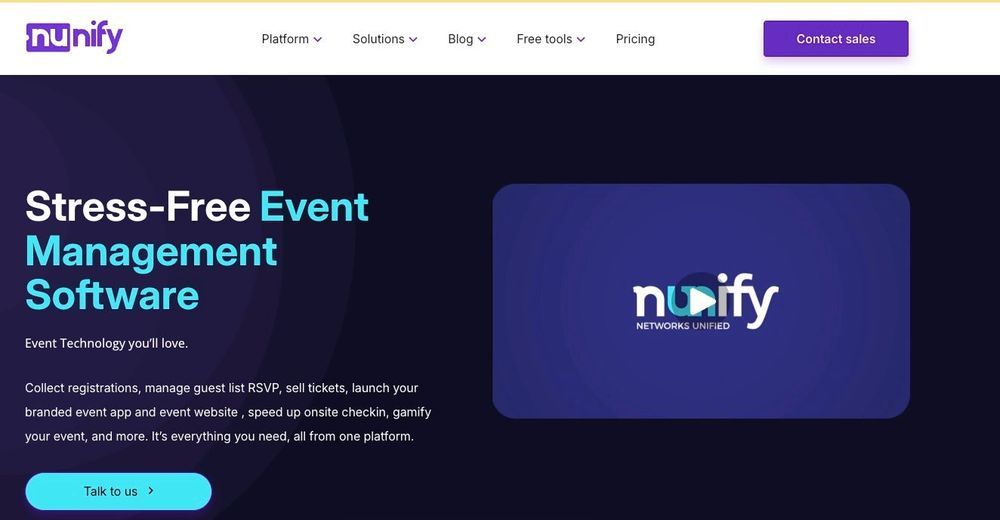
1. Nunify : Best Overall Cvent Alternative

Nunify_best_cvent_alternative.jpg

Best for: Teams wanting full event management without traditional enterprise complexity.

Why it's #1: Enterprise features without enterprise pricing, contracts, or complexity. The practical alternative for organizations that need Cvent's power without Cvent's baggage.

Nunify covers registration, websites, event marketing, guest management, check-in, badge printing, attendee apps, engagement, networking, exhibitors, analytics and AI.

The difference is how quickly teams can use those pieces.

A typical event can be configured in roughly one to two days.

Teams can run unlimited events.

Plans start at $24/month (Essential). Check-in and badges are in Elevate, starting at $49/month. The event app is in Engage, starting at $99/month. Every plan includes unlimited events and unlimited registrations. Enterprise is a custom quote after a call with sales. 15-day free trial of Engage, no credit card.

Where Nunify is stronger than Cvent

Pricing and flexibility: You do not need an enterprise-sized budget to start.

Branding: Registration, websites, emails and apps can carry your brand.

Attendee app: The app is a major part of the product experience.

AI: Zuno gives attendees an AI assistant across channels such as email, WhatsApp and the event app. Nunify also supports AI matchmaking and AI-assisted event workflows.

Speed: Teams can build and update experiences without heavy vendor dependence.

Support: Support is available 24x7 on every plan. First response: Essential within 8 hours, Elevate and Engage within 2 hours. Engage includes a dedicated account manager.

Remote support and real-time onsite support (US and India) are available as add-ons.

Existing standard integrations are included. New custom endpoints can carry additional costs.

The event app plan (Engage) is priced by attendees per event, and Elevate by check-ins.

Small Business Expo ran 319,000 registrations on Nunify and checked in 1,012 guests per hour. At Uniphore, one person ran the event app for 200 attendees.

Where Cvent is stronger

Cvent remains stronger when venue sourcing and large hospitality programs are core requirements.

It may also be the safer choice when your organization needs physical event operations across a very large number of countries.

The question is not:

“Is Nunify better than Cvent?”

It is:

“Do we need Cvent’s infrastructure, or do we need an easier event platform our team can move faster with?”

2. Swoogo : Best for customizable registration

Best for: Teams where registration rules become complicated quickly.

Swoogo has built much of its reputation around registration.

It supports unlimited custom rules, logic and fields. Teams can create different paths by attendee type, apply approvals and connect registration data to other event workflows.

That makes Swoogo particularly interesting for:

  • invite-only events;
  • field marketing programs;
  • member events;
  • complex conferences;
  • multi-track registration;
  • events with many attendee types.

Swoogo also supports event websites, email marketing, mobile apps, onsite check-in and integrations.

G2: 4.9/5 from 214 reviews.
Published pricing: Professional starts at $11,800/year.

Here's a detailed comparison of Cvent vs Swoogo for you. 

Why choose Swoogo over Cvent?

If your biggest frustration is building registration workflows, Swoogo deserves serious consideration.

Its positioning is more focused than Cvent’s entire event ecosystem.

If Swoogo is in your shortlist, check out these 10 alternatives to Swoogo before you decide.

Where Cvent is stronger

Cvent has much deeper venue sourcing and hospitality infrastructure.

If registration is only one piece of a large strategic meetings program, Cvent may still fit better.

3. Bizzabo : Best for B2B event marketing

Best for: B2B marketing teams tying events to pipeline and revenue.

Bizzabo positions its Event Experience OS around B2B conferences and enterprise event programs.

Its platform includes registration, websites, agendas, attendee apps, networking, email marketing, sponsor management, streaming and onsite technology.

That makes Bizzabo a strong alternative when events sit inside a larger marketing strategy.

Think:

registrant → attendee → engagement → lead → pipeline.

G2: 4.3/5 from 450 reviews.
Published pricing: Bizzabo currently publishes Event Experience OS pricing starting at $17,999/year.

Here's a detailed comparison of cvent vs bizzabo for deeper research. 

Why choose Bizzabo over Cvent?

Bizzabo tends to feel more marketing-led.

Its website, event experience and analytics positioning fits teams where demand generation owns the event program.

Where Cvent is stronger

Cvent remains broader across venue sourcing, travel, room blocks and strategic meetings.

Bizzabo is therefore most compelling when event marketing, rather than meeting procurement, drives your decision.

4. Whova : Best for attendee engagement

Best for: Conferences where the attendee app and community experience matter most.

Whova has one of the strongest reputations in event mobile apps.

Its platform combines the app with registration, agenda management, speakers, check-in, networking, announcements, sponsors and exhibitors.

Attendees can build agendas, join discussions, message each other, participate in polls and interact with exhibitors.

G2: 4.8/5 from about 1,940 reviews. Recent reviews frequently mention ease of use, attendee communication, polls, navigation, and engagement.
Pricing: Quote-based.

Here's a detailed comparison of whova vs cvent for deeper research. 

Comparing more options? See our list of Whova alternatives.

Why choose Whova over Cvent?

Whova is especially attractive when attendee engagement is the center of the event.

Its app experience has become one of its biggest differentiators.

Where Cvent is stronger

Cvent is broader for enterprise event operations, sourcing and strategic meeting programs.

For organizations managing extremely complex workflows across departments, Cvent may offer more depth.

For a conference organizer primarily asking, “Will attendees actually use the app?”, Whova belongs near the top of the shortlist.

5. RainFocus : Best for complex enterprise event programs

Best for: Large companies managing sophisticated event portfolios.

RainFocus is built around enterprise event programs.

It supports major conferences, field marketing, roadshows, webinars and other event formats within one platform.

Its strongest case is not simplicity.

It is handling complexity without forcing teams into several disconnected systems.

G2: 4.6/5 from 57 reviews.
Pricing: Quote-based.

Why choose RainFocus over Cvent?

RainFocus should be evaluated when your requirements include:

  • large event portfolios;
  • advanced audience data;
  • complex integrations;
  • enterprise marketing workflows;
  • major user conferences.

It is also particularly relevant for organizations deeply invested in Adobe’s marketing ecosystem.

Already on RainFocus? Compare these RainFocus alternatives.

Where Cvent is stronger

Cvent's venue sourcing network remains a significant advantage.

For smaller teams, both platforms may simply be more software than necessary.

6. Swapcard : Best Cvent alternative for trade shows and exhibitors

Best for: Trade shows, exhibitions, associations and sponsor-led events.

Swapcard has moved heavily toward the commercial side of events.

Its platform connects registration, attendee engagement, exhibitor management, lead capture, networking and analytics.

That makes it particularly interesting for exhibitions.

Exhibitors can manage information, collect leads and participate in networking. Attendee behavior can feed exhibitor insights and post-event follow-up.

Swapcard also supports onsite check-in and badge printing.

G2: 4.6/5 from 228 reviews.
Pricing: Swapcard sells annual subscriptions priced on attendee and exhibitor volume. Starter has a free trial; Professional and Enterprise are custom quotes.

Why choose Swapcard over Cvent?

If exhibitors are customers rather than just participants, Swapcard's focus makes sense.

It pays particular attention to:

exhibitor ROI, hosted buyer programs, networking and monetization.

Already on Swapcard and thinking of leaving? See these Swapcard alternatives.

Where Cvent is stronger

Cvent remains stronger for venue sourcing and broader corporate meetings management.

If the event business model revolves around exhibitors and sponsors, Swapcard deserves a closer look.

7. Stova : Best for enterprise events needing strong onsite support

Best for: Enterprises running complex in-person, hybrid and global events.

Stova combines registration, event websites, mobile apps, onsite technology, virtual experiences and enterprise workflows.

Its onsite offering includes check-in, multiple badge technologies, hardware and attendee tracking.

Its registration tools also support different attendee categories and multi-track events.

G2: 4.2/5 from 197 reviews.
Pricing: Quote-based. 

Why choose Stova over Cvent?

Stova is one of the more direct Cvent alternatives in this guide.

It can work well when you still need an enterprise-style platform but want a different service and technology model.

Where Cvent is stronger

Venue sourcing is no longer as clear-cut a gap as it was earlier in 2026.
In September 2026, Stova added a native Meetingselect integration that brings venue sourcing, booking, and payments into the Stova platform. Stova says the new workflow gives planners access to more than 500,000 venues across 150+ countries.
Cvent still has a mature supplier, hospitality, and strategic-meetings ecosystem, so buyers heavily dependent on venue sourcing should compare the actual workflows rather than assuming either platform has an automatic advantage.

8. EventMobi : Best for teams that value ease of use

Best for: Associations and corporate teams that want capable software without a steep learning curve.

EventMobi covers registration, websites, check-in, badge printing, event apps, lead capture, engagement and multi-event management.

The company deliberately positions itself around ease of use.

Its registration product also supports conditional forms, automated emails, payment processing and both per-event and annual licensing.

EventMobi is worth considering when ease of administration is a priority. 

G2 currently rates it 4.6/5 from 266 reviews, with recent reviewers repeatedly mentioning easy setup, intuitive navigation, and limited training requirements.
Pricing: per-event plans start at $3,000 and annual plans at $8,900 with unlimited events.

Why choose EventMobi over Cvent?

EventMobi makes sense when the event team is small.

You still get a wide feature set without designing your entire operation around enterprise event software.

Where Cvent is stronger

Cvent supports broader strategic meetings, sourcing and hospitality workflows.

EventMobi is strongest when your priority is running the event rather than managing a massive meetings ecosystem.

9. Accelevents : Best all-in-one option for growing event teams

Best for: Conferences and trade shows wanting registration, onsite and attendee engagement together.

Accelevents includes registration, agenda and speaker management, event marketing, self-check-in, badge printing, a mobile app, exhibitors and virtual content.

Its registration product supports custom fields and conditional logic.

G2: 4.7/5 from 177 reviews.
Published pricing: Professional starts at $7,500 for one event; Business starts at $13,500/year with unlimited events.

Why choose Accelevents over Cvent?

Accelevents offers many of the capabilities growing event teams need without starting with a large enterprise stack.

It is especially worth considering when your requirements span:

registration + onsite + app + exhibitors.

Already using Accelevents? See these Accelevents alternatives.

Where Cvent is stronger

Cvent brings more enterprise scale, sourcing depth and hospitality infrastructure.

10. ON24 : Best Cvent alternative for webinars

Best for: B2B webinar programs focused on demand generation.

ON24 is not really trying to replace Cvent onsite.

It is trying to own digital engagement.

Its platform focuses on webinars, virtual experiences, content engagement, personalization and detailed audience analytics.

That makes ON24 especially strong when your event program is judged on:

  • engagement signals;
  • lead scoring;
  • content consumption;
  • sales follow-up;
  • webinar-attributed pipeline.

G2: 4.3/5 from 1,160+ reviews.
Pricing: Quote-based.

Why choose ON24 over Cvent?

Choose ON24 if the “event” is primarily a marketing webinar.

The platform is designed around digital engagement rather than venue operations.

Where Cvent is stronger

For conferences, trade shows, onsite registration and venue sourcing, Cvent is the more complete option.

You should not pay for a huge event management platform if you mainly need webinars.

Here's a detailed comparison of on24 vs cvent

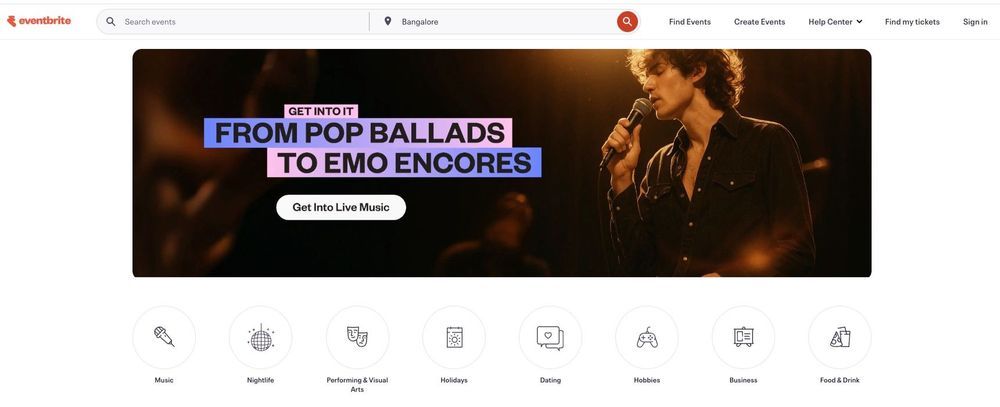
11. Eventbrite : Best for Simple Ticketed Events

Eventbrite_alternative_Nunify.jpg

Best for: Paid public events where ticket sales matter more than enterprise event management.

Eventbrite focuses on event pages, ticketing, payments, promotion, attendee discovery and mobile check-in.

Leaving Eventbrite instead? See these Eventbrite alternatives.

That makes it useful for:

classes, public events, performances, community events, workshops and ticketed experiences.

G2: 4.3/5 from 913 reviews.
Pricing: Free events have no ticketing fee. For paid events in the US, Eventbrite charges ticketing and payment-processing fees.

Why choose Eventbrite over Cvent?

It is much easier to get started.

Eventbrite also brings a consumer marketplace where people can discover events.

Where Cvent is stronger

Almost everywhere that requires deeper enterprise event operations.

If you need complex registration, attendee apps, enterprise integrations, detailed sponsor workflows or strategic meetings management, Eventbrite is not a like-for-like Cvent alternative.

Which Cvent alternative is best for your use case?

A generic top-ten list only gets you so far.

Different teams leave Cvent for completely different reasons.

Best Cvent alternatives for a small events team

A small events team usually means one to three people running events on top of another job. They need setup in days, a price they can predict, and support that answers. Start here:

  • Nunify: starts at $24/month with unlimited events and registrations. Check-in and badges from $49/month (Elevate), event app from $99/month (Engage). 15-day free trial, no credit card. At Uniphore, one person ran the app for 200 attendees.
  • Accelevents: Business starts at $13,500/year with unlimited events.
  • EventMobi: per-event plans from $3,000 and annual plans from $8,900 with unlimited events, built around ease of use.
  • Eventbrite: free for free events if ticketing is all you need.

Skip Cvent, RainFocus and Stova unless venue sourcing or a large enterprise program is why you are buying.

Best Cvent alternative for trade shows and exhibitors

Start with Swapcard, Nunify and Whova.

Swapcard is particularly strong around exhibitor monetization, lead capture and networking.

Nunify makes more sense when you want exhibitor workflows inside a broader event management platform.

Whova is a good fit when exhibitor exposure and attendee engagement through the app matter most.

Best Cvent alternatives for luxury and retail brands

For luxury and retail events, start with Nunify, Bizzabo, or Cvent itself. Nunify is the strongest fit when white-label branding and a smooth guest experience matter most, while Bizzabo is worth considering for marketing-led brand events.
Nunify lets teams customize registration, event websites, emails, check-in, and attendee apps so the technology stays behind the brand rather than competing with it. That makes Nunify particularly strong for product launches, VIP events, retail experiences, and brand activations.
 

Best Cvent Alternative for Corporate Events

Winner: Nunify

Corporate events need reliable registration, professional branding, fast check-in, and data that flows to CRM systems. Nunify's Salesforce and HubSpot integrations make post-event follow-up automatic.

Key features: white-label branding, single sign-on for enterprise, role-based access control, CRM integration, attendance tracking.

Best Cvent alternatives for associations

For associations, start with Nunify, Whova, or EventMobi. Nunify is the stronger all-in-one option for associations running recurring conferences and member events, Whova stands out for attendee networking and community, and EventMobi is a good fit for smaller teams prioritizing ease of use.
If you only need ticketing for a simple paid event, Eventbrite may be enough.
For organizations needing registration, apps, onsite operations and engagement together, Nunify offers a broader alternative without requiring a traditional enterprise-sized starting point.

Best Cvent Alternative for Hybrid Events

For a real hybrid conference, shortlist Nunify, Bizzabo and Whova.

If the digital side is mostly webinars, add ON24.

The important question is whether both audiences share:

registration, agendas, networking, engagement and reporting.

If onsite and virtual data live in separate systems, your hybrid event is really two events.

Best Cvent competitors for customizable registration forms

Start with Swoogo, Nunify and Accelevents.

Swoogo deserves the first look when registration complexity is the core requirement. It openly supports unlimited custom logic and fields.

Nunify is a stronger choice when registration needs to connect directly with websites, communications, attendee apps, check-in and event analytics.

Accelevents is worth considering for teams wanting strong registration without moving into traditional enterprise software.

Which event registration tools have simpler interfaces than Cvent?

For registration tools with simpler interfaces than Cvent, shortlist Nunify, EventMobi, and Swoogo. 
Nunify is a good fit when registration needs to connect with the rest of the event without enterprise complexity. See how Nunify event registration works.
EventMobi prioritizes easier administration for smaller teams.
Swoogo gives teams deep registration flexibility in a more registration-focused platform.
Don't judge ease of use from a sales demo. Ask someone who has never used the software to create an event, build registration, change the branding, and send an email.
Watch where they get stuck. That tells you more than a feature matrix.

Best Cvent alternative for Attendee Hub and mobile event apps

Select Nunify and Whova.

Whova has made attendee engagement and networking central to its product.

Nunify is stronger when you want the attendee app connected with registration, check-in, branding, analytics and AI inside the same platform.

Bizzabo should also be considered when app engagement needs to feed B2B marketing analytics.

Best Cvent alternative for venue RFPs and group bookings

This is one category where Cvent remains the benchmark.

Its Supplier Network gives planners access to a very large global venue ecosystem, while Cvent Passkey supports room-block management.

If finding venues and managing large hotel programs drives your software decision, switching simply for the sake of switching makes little sense.

However, Stova is now a more direct alternative than it was earlier in 2026 after adding Meetingselect-powered venue sourcing, booking, and payment capabilities.

If venue sourcing is only a small part of your event workflow, then another platform may still be better overall.
 

Best Cvent alternatives for end-to-end event management and email marketing

Look closely at Nunify, Bizzabo, Stova and EventMobi.

All four connect attendee communications with broader event workflows.

The decision becomes less about whether email exists.

Ask whether you can segment attendees using real registration and engagement data without exporting another CSV.

Which Cvent alternatives offer better customer support?

Be careful with this question.

“24/7 support” tells you very little by itself.

Cvent offers 24/7 support. Swoogo promotes an internal support team. Swapcard offers live chat and onsite professional services.

Nunify offers 24x7 support on every plan. First response is within 8 hours on Essential and within 2 hours on Elevate and Engage.

Remote support and real-time onsite support (US and India) are available as add-ons.

So compare the actual service model:

response SLA, named contacts, event-day coverage, onsite availability and extra charges.

How Cvent alternatives compare on the jobs that matter

Cvent pricing vs alternatives: compare the whole bill

Searching for a cheaper Cvent alternative is easy.

Comparing the real cost is harder.

Start with how Cvent pricing works.

A useful quote should include all seven pieces:

  1. Platform subscription
  2. Number of events
  3. Attendee limits
  4. Registration or transaction fees
  5. Implementation and professional services
  6. Integrations and custom development
  7. Onsite equipment and support

Nunify plans start at $24 per month.

Enterprise is a custom quote after a call with sales.

Events are unlimited.

The event app plan (Engage) is priced by attendees per event, and Elevate by check-ins.

Standard integrations already available in the platform are included.

New custom endpoints can cost extra.

Professional services are also available, at a much lower cost than comparable Cvent services.

The useful number is not:

“What does the license cost?”

It is:

“What will it cost us to run our entire event program next year?”

Can you use Cvent for free?

Yes. Cvent offers free access to selected products, but that doesn't mean running every event is free. 

You can create event websites and set up registration without an upfront charge through its pay-as-you-go offering. 

Fees generally apply when registrations are processed, including potential charges for free events. 

Cvent also offers free venue sourcing through its Supplier Network and a limited free event diagramming option. 

Its broader enterprise event management packages use separate commercial arrangements. 

Check the applicable fees and included features before launching an event.

Migration Checklist: Switching from Cvent

Switching event platforms creates two different jobs.

Setting up the new platform is one.

Migrating your organization is another.

For Nunify, a typical new event setup can take around one or two days.

A large enterprise migration can take longer because of integrations, historical data, templates, permissions and internal approvals.

Do not confuse those timelines.

Before switching:

  • List the Cvent modules your team actually uses.

  • Export attendee and historical event data.

  • Document CRM and marketing integrations.

  • Identify registration logic that must be recreated.

  • Map your current event website and email templates.

  • Test check-in, badges and the attendee app.

  • Run one real pilot event.

  • Compare reporting with your current Cvent workflow.

  • Confirm support coverage for event day.

  • Review your Cvent renewal and cancellation terms.

A demo shows you what software can do.

A pilot tells you what your team can actually do with it.

The Verdict: Which Cvent Alternative Should You Choose?

If you want the closest answer to “Cvent capabilities without the Cvent experience and cost,” start with Nunify.

It is strongest for teams that care about:

easy administration, better-looking attendee experiences, attendee apps, white-label customization, AI, pricing flexibility and running many events.

If one specialized requirement dominates your decision, choose accordingly.

Choose Swoogo for deeply customizable registration.

Choose Bizzabo for B2B event marketing.

Choose Whova when attendee community matters most.

Choose RainFocus for very complex enterprise event programs.

Choose Swapcard for trade shows and exhibitor revenue.

Choose ON24 for webinars.

Choose Eventbrite for straightforward public ticketing.

And stay with Cvent when venue sourcing, hotel programs or global meeting infrastructure justify the complexity.

The best Cvent alternative is not the platform with the longest feature list.

It is the one your team can actually use to run better events.

FAQ

  • Nunify is our overall pick for organizations wanting full event management with easier administration, flexible pricing, strong attendee apps, branding and AI.

    Swoogo is better when advanced registration is the deciding factor. Bizzabo is strong for B2B event marketing, while Whova stands out for attendee engagement.

  • Nunify, for most small teams. It starts at $24/month with unlimited events and registrations, and one person can run it. Accelevents and EventMobi are also worth a look.

  • Yes. Nunify plans start at $24 per month with unlimited events and unlimited registrations. Enterprise is a custom quote after a call with sales.

    Eventbrite can be cheaper for simple ticketing, but it does not replace the full Cvent event management stack.

    Always compare total cost, not subscription price alone.

  • Swoogo, Nunify and Accelevents are three strong choices.

    Swoogo stands out for advanced conditional logic. Nunify combines registration with websites, event marketing, apps and onsite workflows. Accelevents provides strong registration tools in a broader all-in-one platform.

  • Nunify and Whova should both be considered.

    Whova is particularly strong in attendee networking and engagement. Nunify combines a branded attendee app with registration, check-in, event marketing, analytics and AI.

    Bizzabo is also worth evaluating for B2B events where attendee engagement needs to connect to marketing performance.

  • For pure venue sourcing, Cvent is still difficult to beat.

    Its Supplier Network and hospitality products are a real differentiator.

    Choose another platform when sourcing represents only one small part of a much larger event management requirement.

  • Nunify, EventMobi and Swoogo are good places to start.

    Do not judge ease of use from a sales demo. Ask a new user to build registration, update branding and send a communication without training.

    That test quickly exposes software complexity.

  • There is no useful universal winner because service plans differ.

    Compare response SLAs, named account contacts, live event support, onsite availability and additional charges.

    Nunify offers 24x7 support on every plan. First response is within 8 hours on Essential plan and within 2 hours on Elevate and Engage plans. Remote support and real-time onsite support (US and India) are available as add-ons.